Coprosma Weevil

Anagotus rugosus

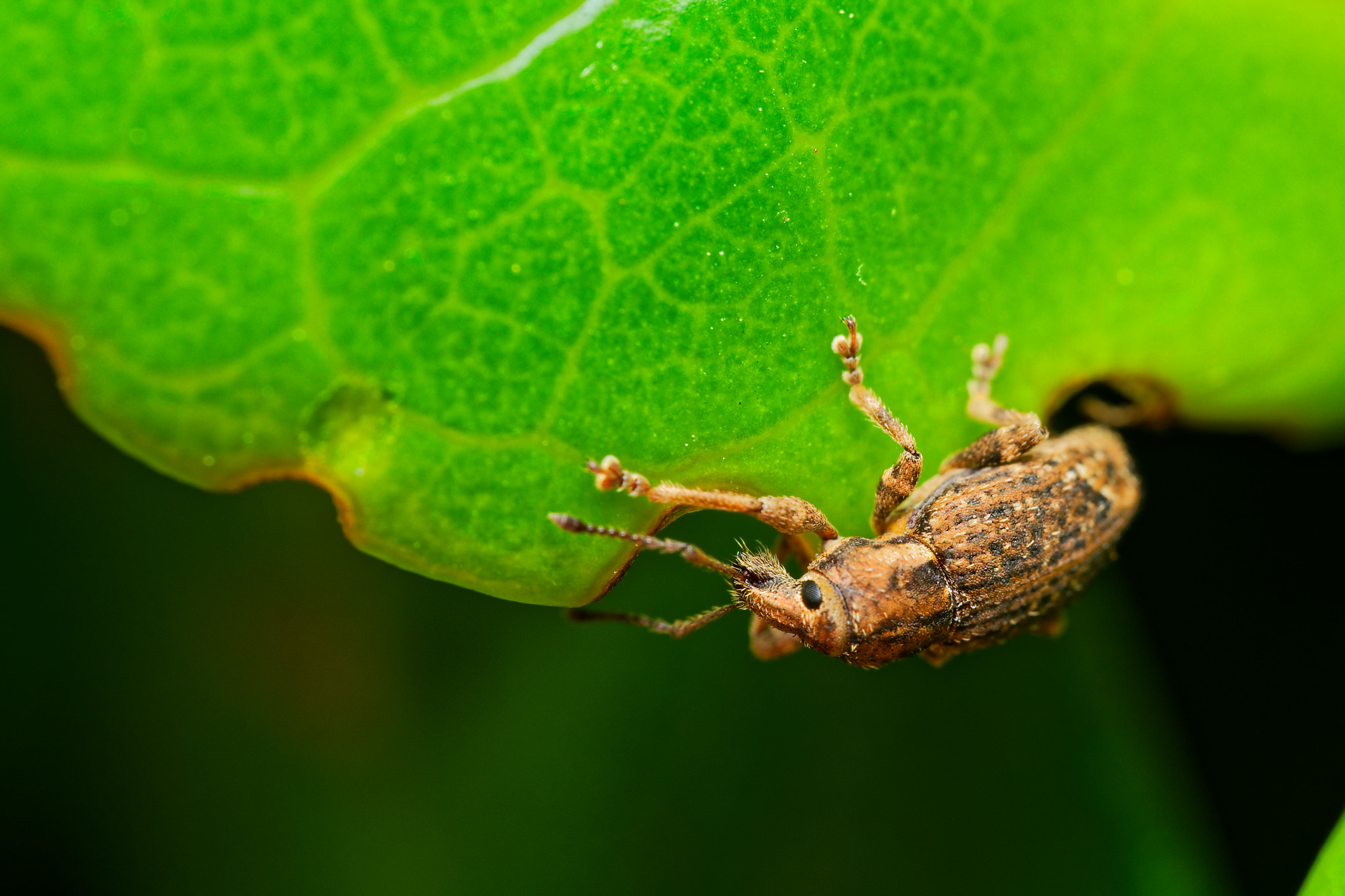
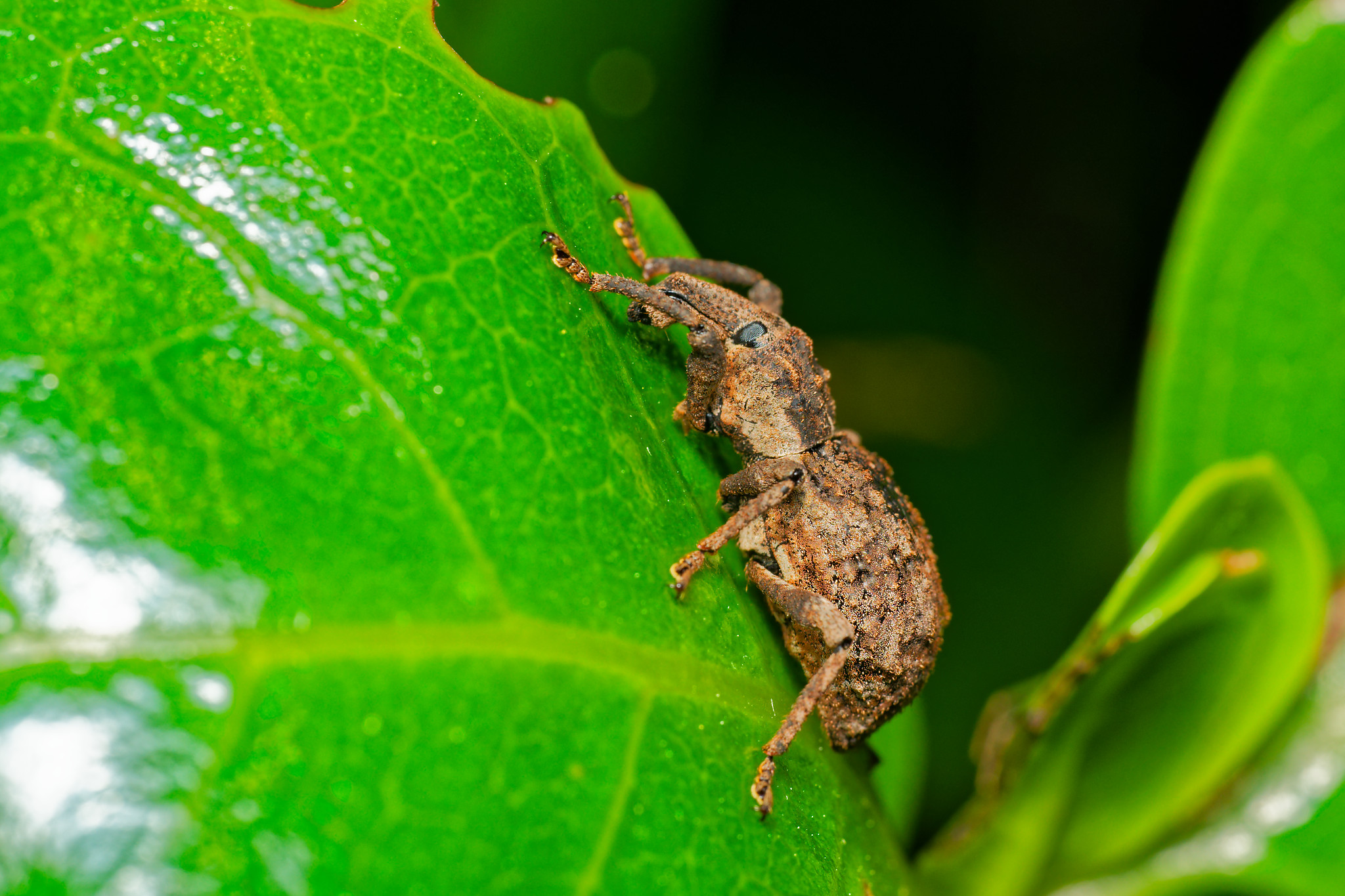
Of the three big flightless weevils which could be on Puangiangi, flax weevil is obviously there. Coprosma weevil took until 2021, when it was found by Ian Millar, Mark Anderson and Em Oyston. I hadn’t seen one until last night (January 2026), when a couple were out and about on taupata, Coprosma repens, despite the gale.
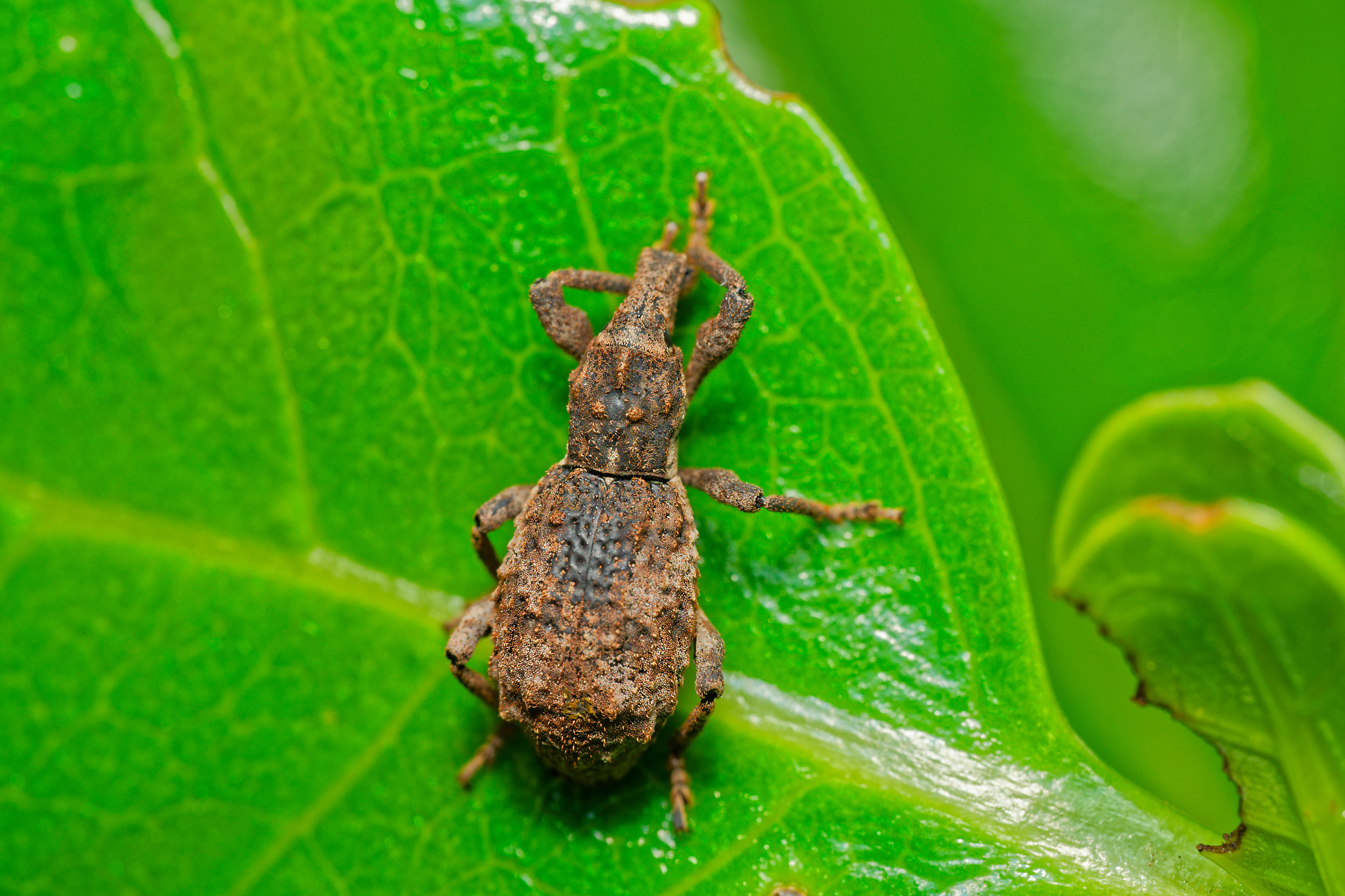
These ones are the smallest (10-15 mm) of flax, ngaio and coprosma weevils. They used to be widespread but I think they are now more likely to be found on predator-free islands. It’s believed they feed only on Coprosma, the exact species depending on which one is where the weevils still survive.

That makes two Anagotus weevils for Puangiangi. I have looked some more for ngaio weevil since last writing about it, but still with no luck. I reckon the leaf litter under taupata is similar to that under ngaio, a bit open and easy for rats to navigate compared with the base of a flax. So does the earlier idea hold water that ngaio weevils, if present, would have all been eaten because they could not hide in leaf litter effectively, yet these smaller but presumably just as appetising ones survived?
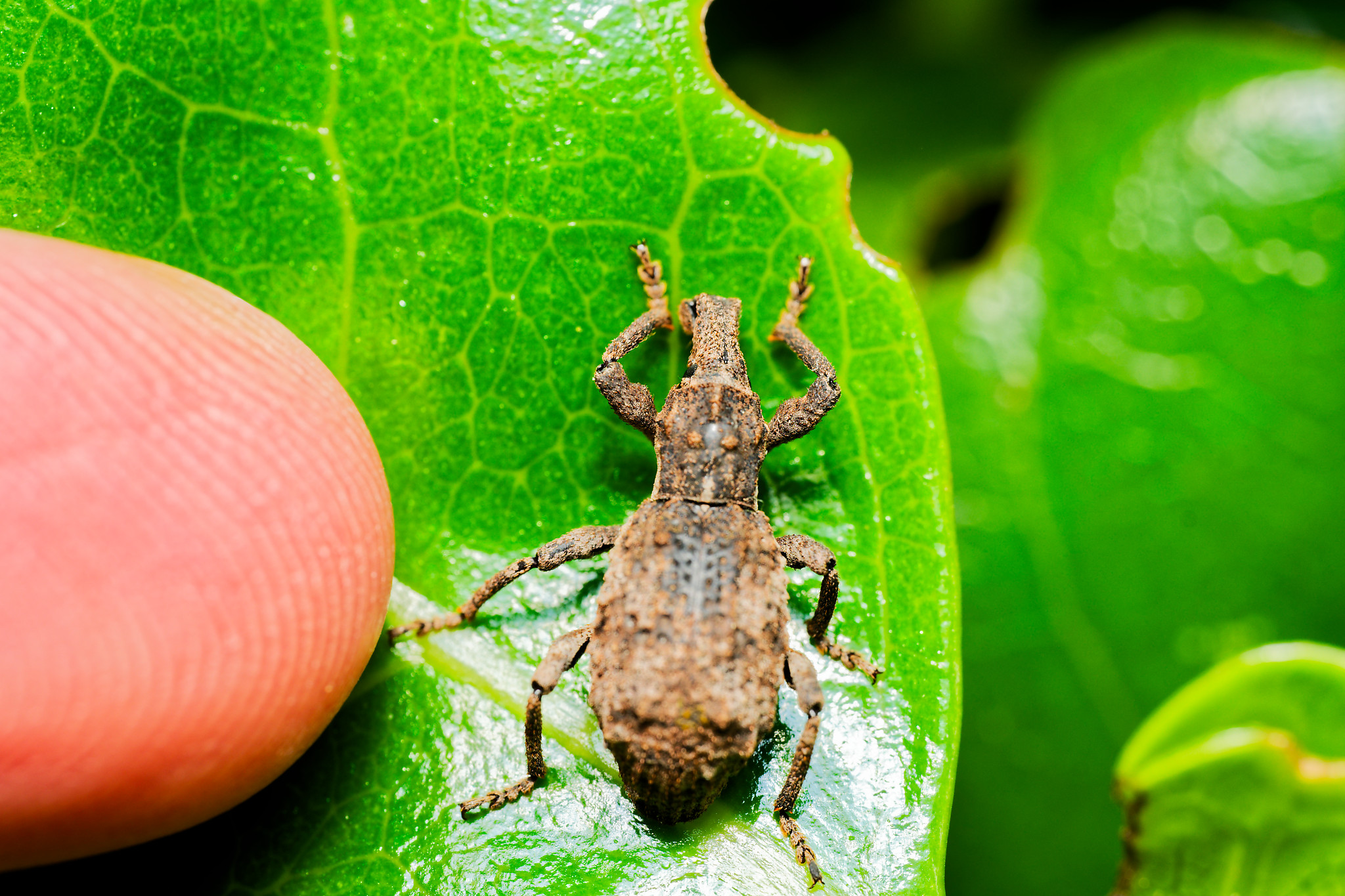
My fingertip for scale. This animal was very cooperative. The other one I found “dropped” before I could get a sharp photo.
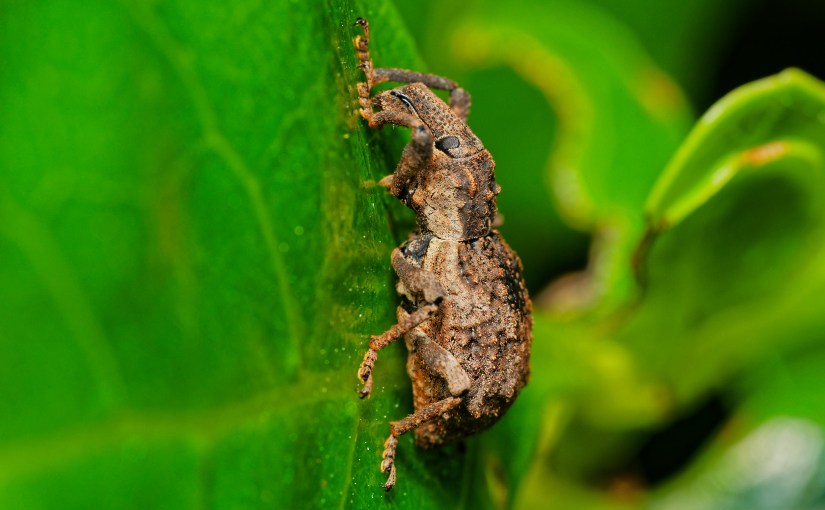
A different, much smaller weevil on the same shrub as one of the coprosma weevils.

Australasian Green Shield Bug

Glaucias amyoti

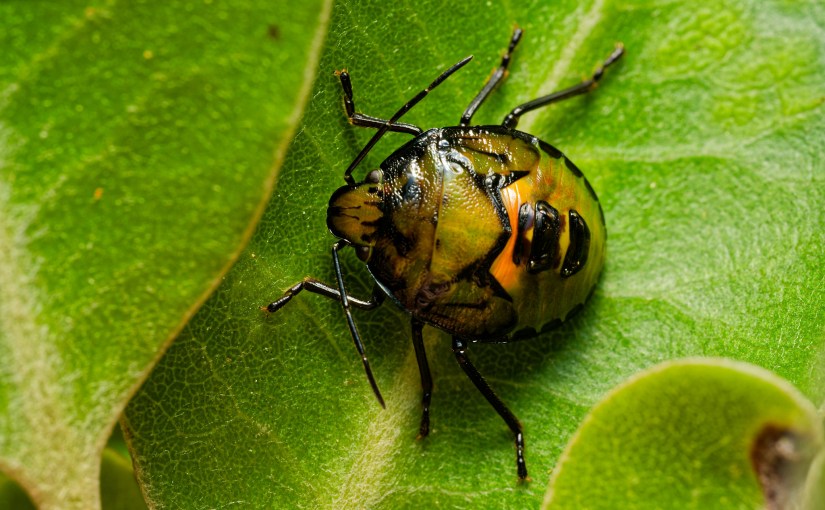
This shield bug was out at night on kohuhu (Pittosporum tenuifolium) in January. Initially I thought it might be a later stage of the soldier bug nymphs photographed in November, but it is the fifth and final instar nymph of a green shield bug which is native to the North Island and upper South, also being found in Australia and a bit further afield too.

A shield bug on kohuhu needs a bit of thought, as there is also a similar one which uses only Pittosporum as hosts. This was all sorted out in minutes on iNaturalist and in a nice article by N A Martin at Landcare.

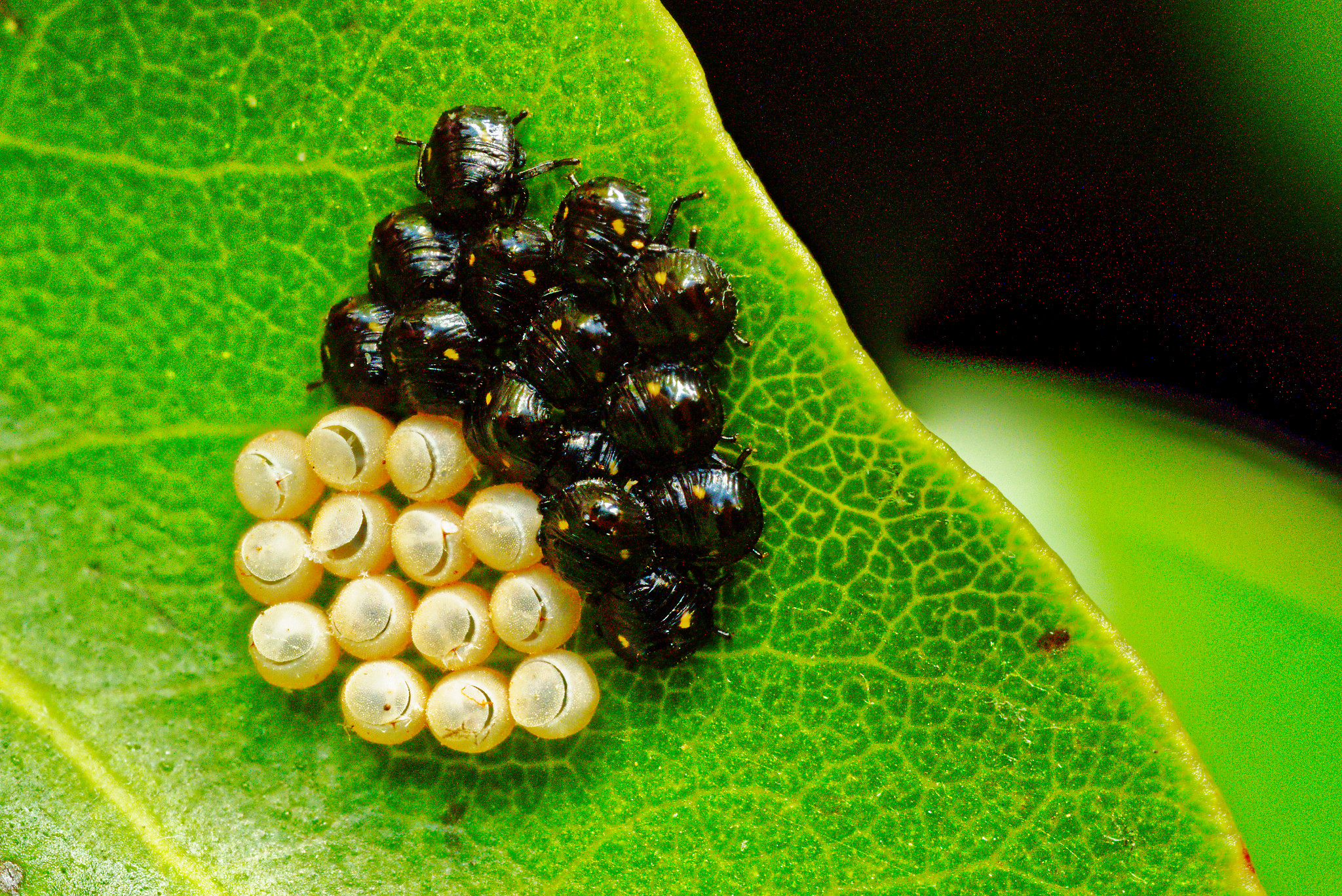
The 5th instar shows developing wing buds- the downward continuations of the upper greenish area. There are several generations a year and nymphs of all sizes can be seen in the same spring or summer month. The very same host shrub also had several groups of first-instar nymphs clustered next to their egg cases:

You can see the splits in the egg cases that the nymphs hatched from (14 out of 14). This is a very common and underappreciated insect, like the others in this series of posts. I bet they are in your garden if you are within their range, but check the differences between them and the pest green vegetable bug and potato bug.