
Pseudopanax arboreus
Everyone knows this shrub, but familiarity does not breed contempt on Puangiangi. Fivefinger is in the second line of colonisers of the formerly grazed areas and the first arrival to get properly above head height. Tauhinu is usually first to get through the grass sward and sheep will leave it alone if the farmer does not grub it out; it then provides perches for birds that bring seeds of Coprosma propinqua and Pseudopanax arboreus. Both of these are eaten by sheep so it was not until 2013 when we ate the last of the sheep that the seedlings started to survive and get away.

Fivefinger does not normally get through rank grass itself so it benefits from the grass dying out under tauhinu. In places where the shade is not heavy enough to suppress the seedlings, it is a very quick grower.
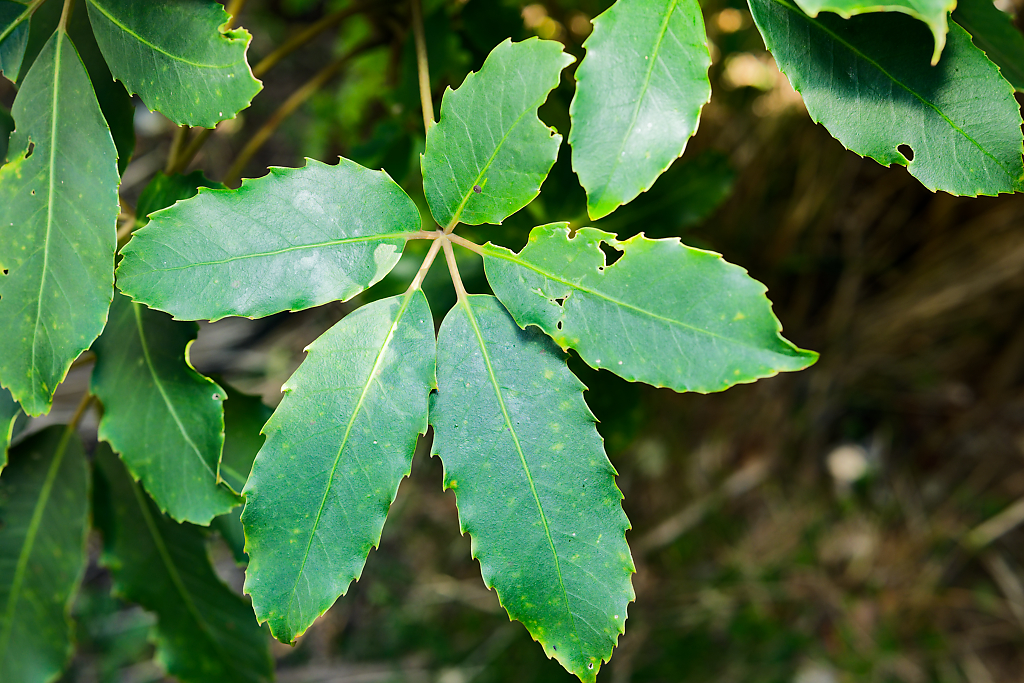
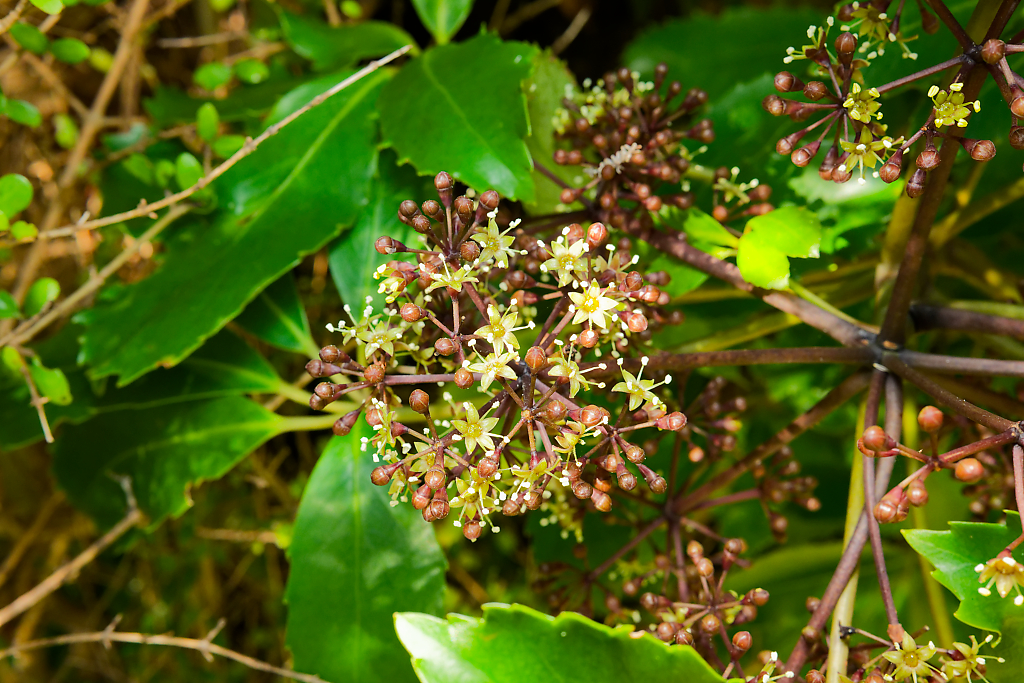
The flowers provide nectar for bellbirds at an otherwise lean time in winter. Many of the birds will take the abundant fruits in spring and summer and spread the seeds around.

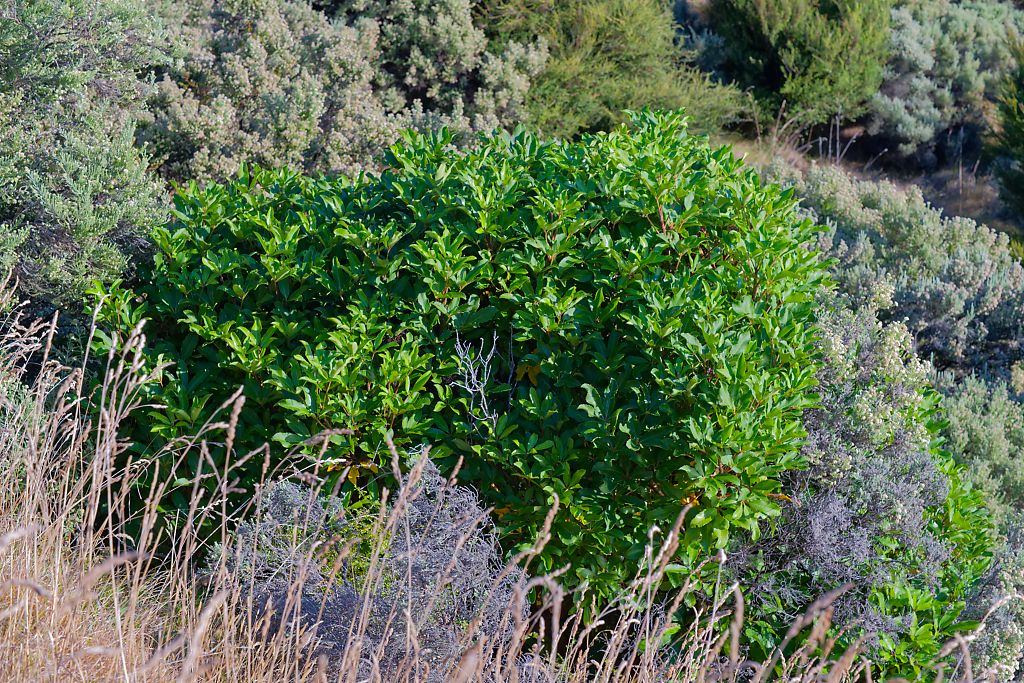
If you would like to see more about how Pseudopanax arboreus fits into the transformation from grassland to forest, you can also look at the video I made earlier.
(Part of an ongoing effort to photograph all the vascular plants on the island. Each species will get a page when I get enough reasonable photos.)
Discover more from Fauna Recovery New Zealand
Subscribe to get the latest posts sent to your email.
 Fauna Recovery New Zealand