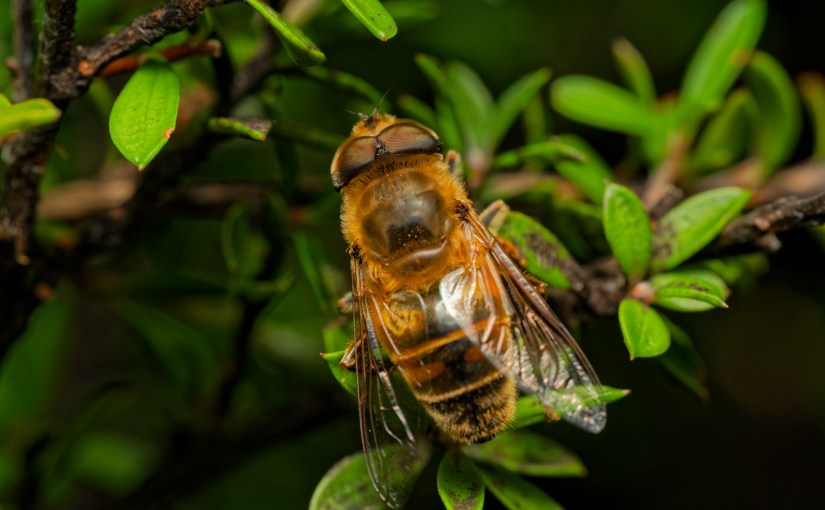
Which insects visited the manuka I staked out this January? A macro video look at how these prosaic shrubs can be wonderful resources for small creatures that usually escape our notice.
For those interested the footage was taken at 4K 120 fps (which has a crop with my camera), handheld in natural light (too harsh and contrasty but I’m not a one-armed paperhanger). The camera has an APSC sensor, the lens is a Laowa 65 mm macro and the magnification varied between about 0.25X and 2X. The video was edited down from a couple of hours of raw footage, slowed down to 1/5 speed and stabilised in the video editor, which added a further mild crop.
 Fauna Recovery New Zealand