The Mystery of the Chewed Ngaio

***Heavily edited since I first posted this article. Might be worth a re-read.***

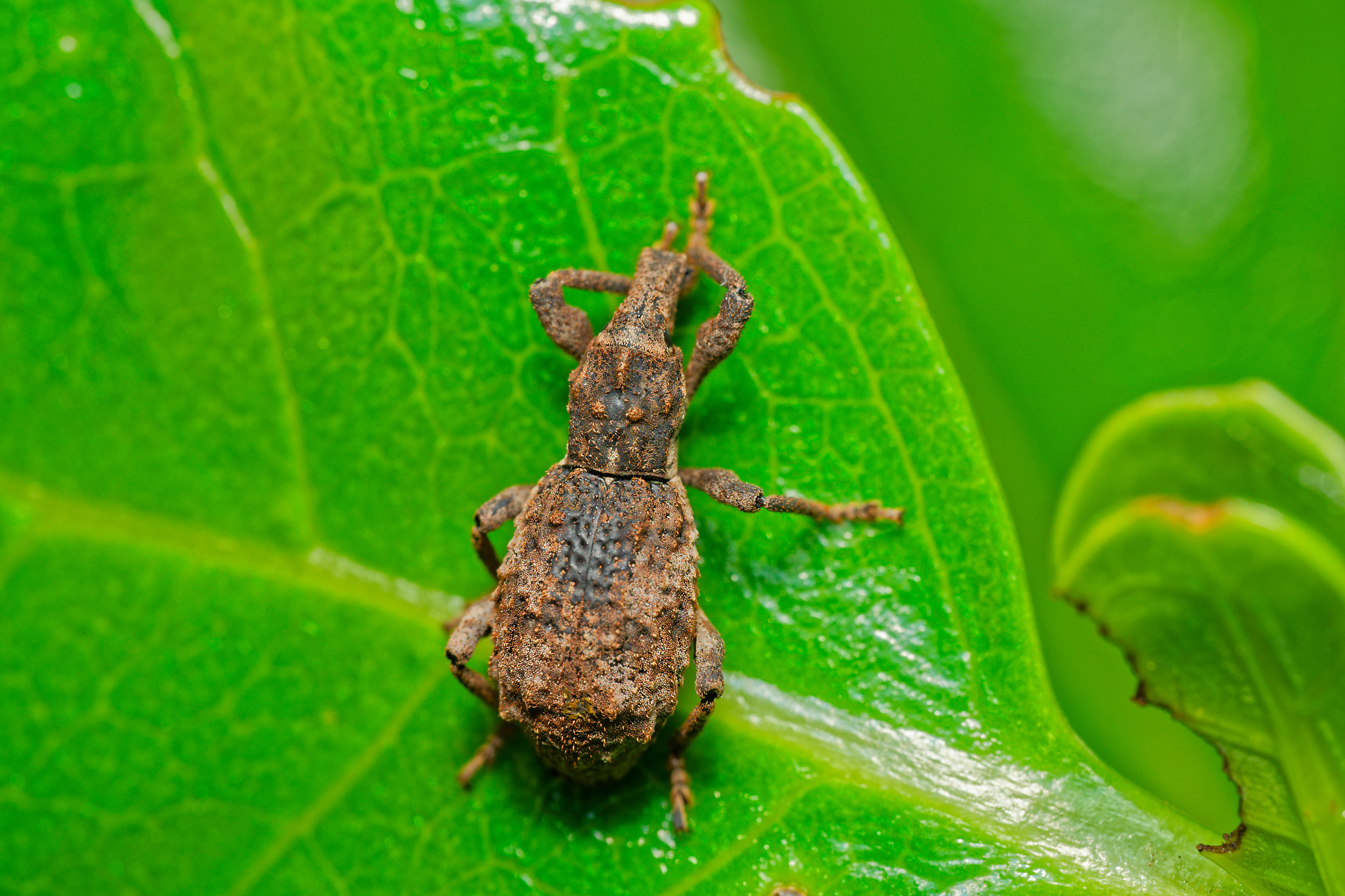
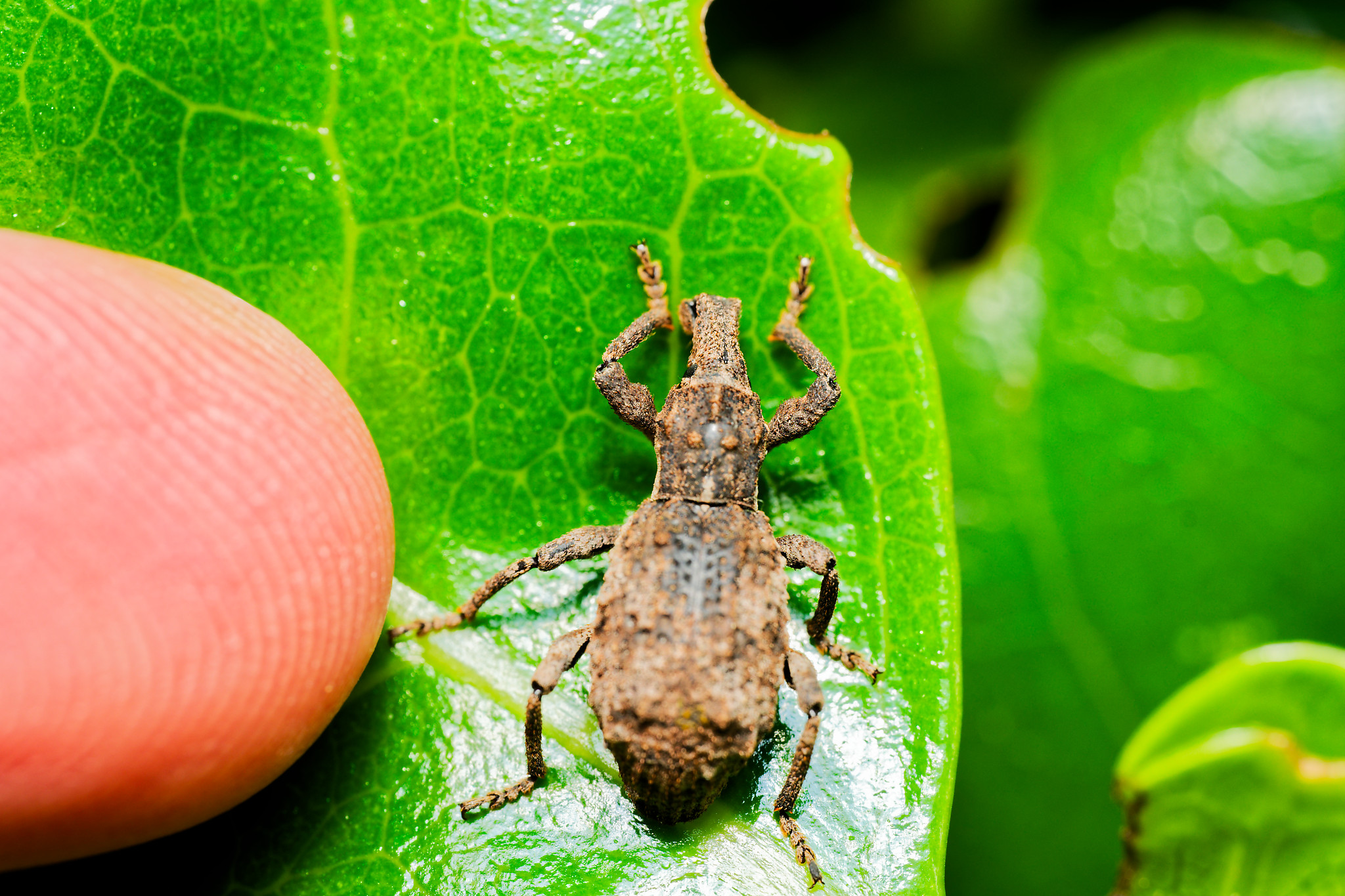
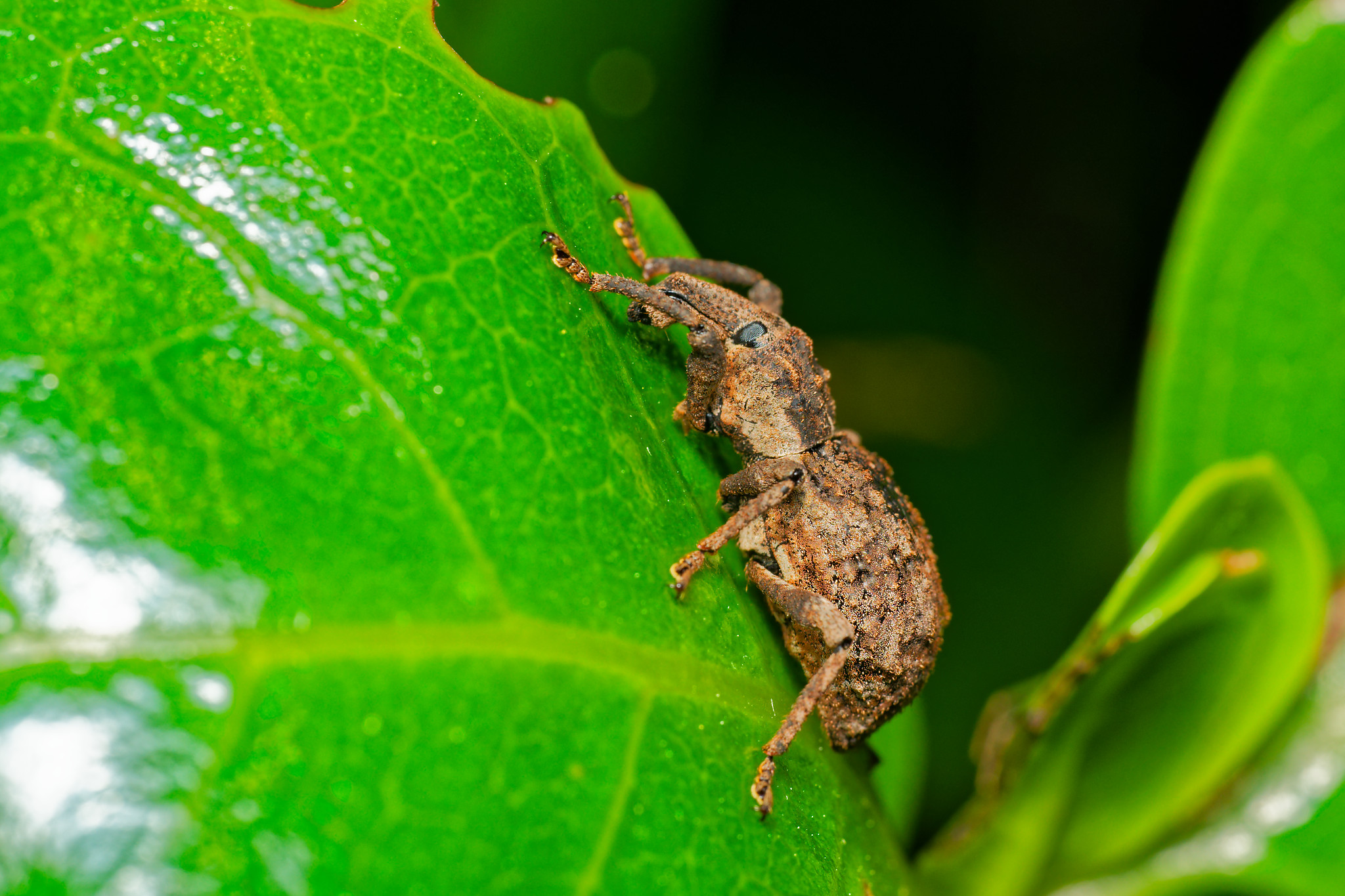
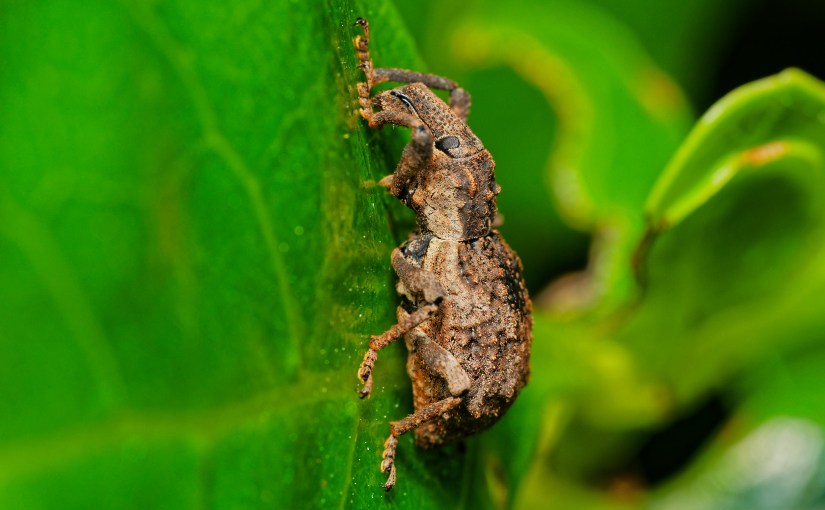
Early on, we knew that flax weevil were on Puangiangi from their characteristic feeding sign- the chewed leaf edge tends to have a sharper angle on one side and a shallower angle on the other. If that flightless Anagotus weevil survived rats, had others? In particular was the threatened ngaio weevil, currently known only from Takapourewa, present?

Flax weevil feeding sign

Despite a fair bit of searching we have not found them yet and if they had ever been present the rats may well have got the last one. Ngaio weevil share the same response as flax weevil when threatened- they “drop” off the leaf they are feeding on and try to hide on the ground. One opinion as to why they might be more vulnerable to rats than flax weevil is that flax weevil drop into the congested leaf bases of flax and are hard to find, whereas ngaio weevil drop into the comparatively open ground under their favoured ngaio.

What we have found, though, are various chewed ngaio leaves:

Weevil expert Mark Anderson, who has also looked for ngaio weevil on Puangiangi, commented on the leaves: Number 1 is not ngaio weevil; 2 is a bit flat in the centre and is probably tree weta; 3 is a weevil but is too small for ngaio weevil (possibly Lyperobates); 4 is a definite maybe but the cut is a little steep and it’s a bit near the leaf tip; 5 is a serious possibilty for ngaio weevil, but of course something else might have randomly got the right shape; 6 is a bit small and there is something not quite right about the steepness of the entrance and exit.

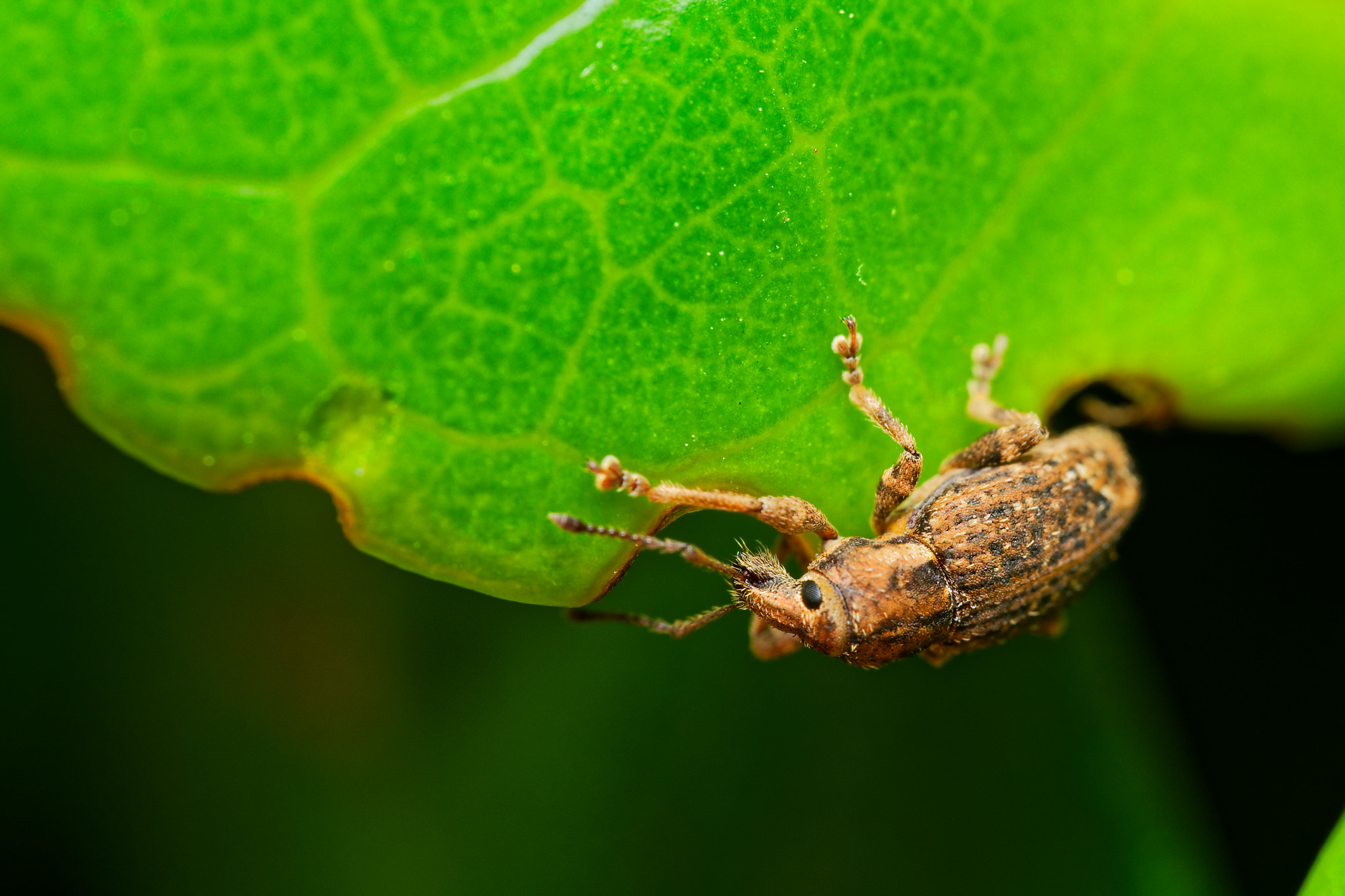
A small weevil on ngaio, found by Peter Gaze. Leaf 3 candidate?

We have not matched up the correctly chewed leaves with a sighted weevil yet, but in August and again in November 2025 I found, firstly a few in Winter then quite a lot more in Spring, a chafer beetle on ngaio. It is probably flightless as it also “drops” when accidentally disturbed, and I have found it only on ngaio so far. Advice from iNaturalist places it in the genus Odontria.

The native chafer beetles include the grass grub, and the altogether more welcome Cromwell chafer (genus Prodontria), a threatened beetle which even has its own reserve set aside.

The beetles are about 12 mm long
Chewing the edge of the leaf

Mark Anderson thinks leaf 1 might be Odontria. Have you seen the same or similar chafer beetles on ngaio or other plants in your area? Please comment. If this is an original observation peculiar to the island there is no need to get overly excited about it. After all only a small fraction of New Zealand’s invertebrates have ever been named or studied in detail. It’s just interesting.

Thinking about the comment below from Mike Aviss, it’s pertinent that it took 10 years for flax weevil to be found on Whakaterepapanui from the time of rat eradication. It’s now 26 years since rats were eradicated from Puangiangi, but what if a vanishingly small population of ngaio weevil held on, and since 1999 they have been subject to heavy predation by weka, pukeko and other meat-eating native animals that can winkle them out from leaf litter under ngaio? Does that explain leaf 5 and why we haven’t yet found them, but might as the population inches up?

False Wireworm

Mimopeus opaculus

I associate this large darkling beetle with predator-free offshore islands, yet Andrew Crowe in “Which New Zealand Insect” says it is common on the mainland south of Auckland.

It’s probably fair to say the animals on islands in Cook Strait and Marlborough are larger than normal though. Mimopeus opaculus is about 20 mm long and is common on Puangiangi, having survived rats and now apparently thriving. They congregate under cover in the daytime and feed at night, being seen on the ground and on tree trunks.

Of the 150 species of darkling beetles in New Zealand, there are several on the island and I have earlier posted some photos of the smaller Artystona rugiceps. Its common name, which I am not convinced is commonly used, refers to the grubs. Mealworms, used for feeding robins among other fun activities, are the grubs of Tenebrio molitor, which is in the same family.

The animal below has a very small passenger or parasite behind its right eye. The mite is under 0.5 mm long: