
***Heavily edited since I first posted this article. Might be worth a re-read.***
Early on, we knew that flax weevil were on Puangiangi from their characteristic feeding sign- the chewed leaf edge tends to have a sharper angle on one side and a shallower angle on the other. If that flightless Anagotus weevil survived rats, had others? In particular was the threatened ngaio weevil, currently known only from Takapourewa, present?

Despite a fair bit of searching we have not found them yet and if they had ever been present the rats may well have got the last one. Ngaio weevil share the same response as flax weevil when threatened- they “drop” off the leaf they are feeding on and try to hide on the ground. One opinion as to why they might be more vulnerable to rats than flax weevil is that flax weevil drop into the congested leaf bases of flax and are hard to find, whereas ngaio weevil drop into the comparatively open ground under their favoured ngaio.
What we have found, though, are various chewed ngaio leaves:
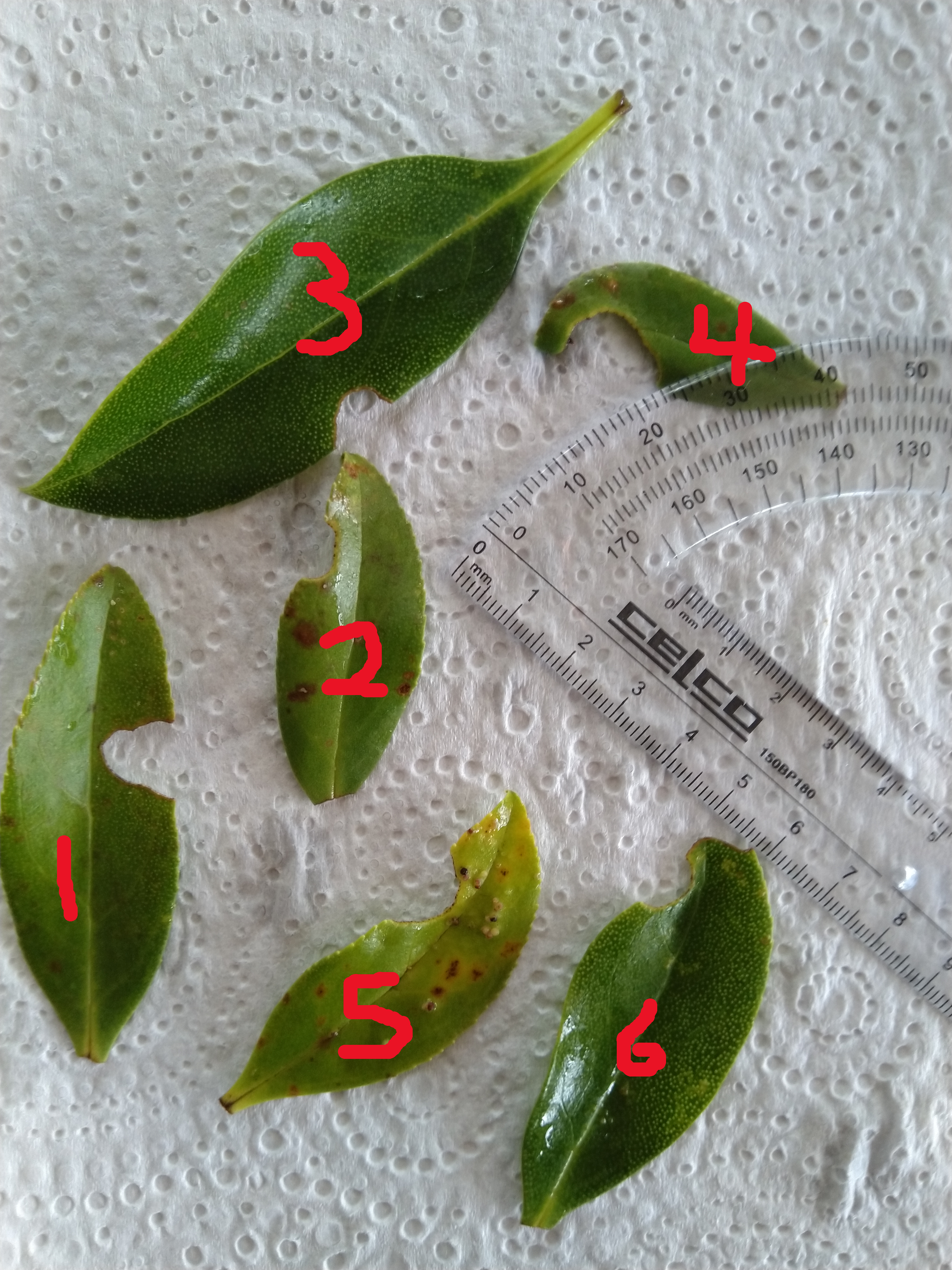
Weevil expert Mark Anderson, who has also looked for ngaio weevil on Puangiangi, commented on the leaves: Number 1 is not ngaio weevil; 2 is a bit flat in the centre and is probably tree weta; 3 is a weevil but is too small for ngaio weevil (possibly Lyperobates); 4 is a definite maybe but the cut is a little steep and it’s a bit near the leaf tip; 5 is a serious possibilty for ngaio weevil, but of course something else might have randomly got the right shape; 6 is a bit small and there is something not quite right about the steepness of the entrance and exit.

We have not matched up the correctly chewed leaves with a sighted weevil yet, but in August and again in November 2025 I found, firstly a few in Winter then quite a lot more in Spring, a chafer beetle on ngaio. It is probably flightless as it also “drops” when accidentally disturbed, and I have found it only on ngaio so far. Advice from iNaturalist places it in the genus Odontria.
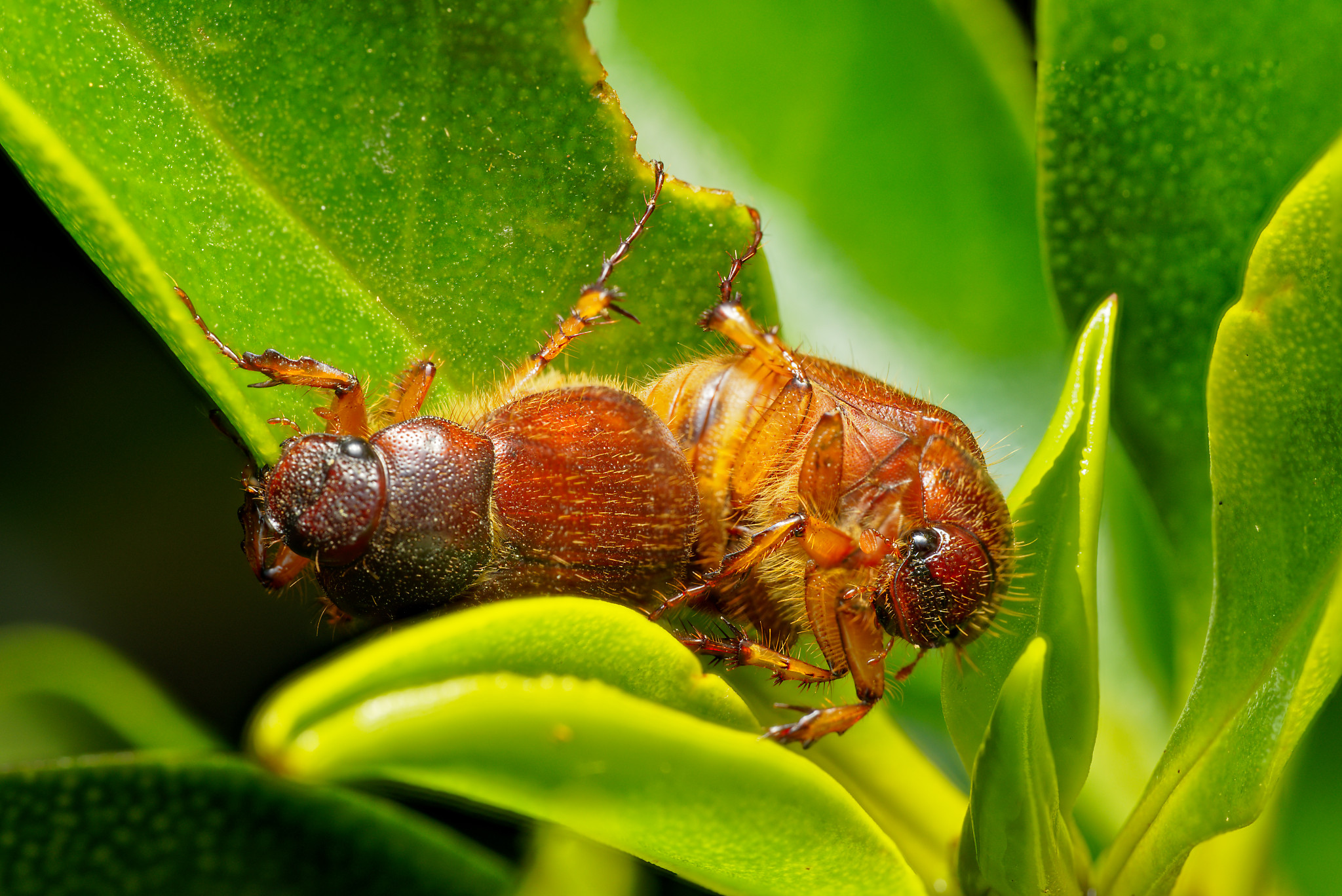
The native chafer beetles include the grass grub, and the altogether more welcome Cromwell chafer (genus Prodontria), a threatened beetle which even has its own reserve set aside.

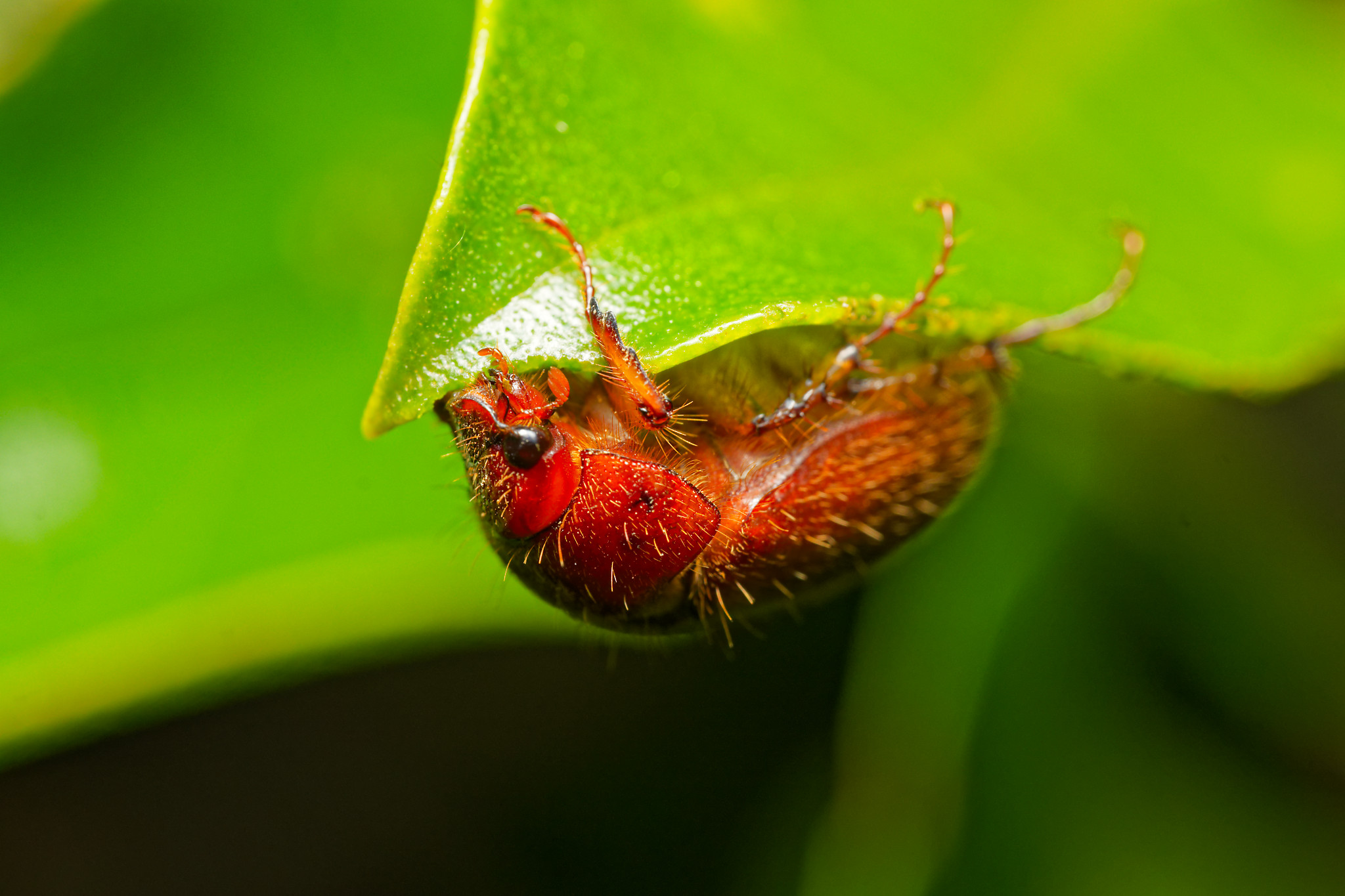
Mark Anderson thinks leaf 1 might be Odontria. Have you seen the same or similar chafer beetles on ngaio or other plants in your area? Please comment. If this is an original observation peculiar to the island there is no need to get overly excited about it. After all only a small fraction of New Zealand’s invertebrates have ever been named or studied in detail. It’s just interesting.

Thinking about the comment below from Mike Aviss, it’s pertinent that it took 10 years for flax weevil to be found on Whakaterepapanui from the time of rat eradication. It’s now 26 years since rats were eradicated from Puangiangi, but what if a vanishingly small population of ngaio weevil held on, and since 1999 they have been subject to heavy predation by weka, pukeko and other meat-eating native animals that can winkle them out from leaf litter under ngaio? Does that explain leaf 5 and why we haven’t yet found them, but might as the population inches up?
Discover more from Fauna Recovery New Zealand
Subscribe to get the latest posts sent to your email.
 Fauna Recovery New Zealand
Thank you Barry for another interesting and informative post. Everything has a purpose and despite the fact that these wee creatures dont have the “fan appeal” of kakapo or wetas the fact that they are being helped along is heartwarming. Keep up the good work, I love to hear about it.
LikeLiked by 1 person
Hi Barry,
We had flax weevils turn up on Wakapapanui Is about 10 years after the poison operation too. Wakaterepapanui actually had two species of rat but the weevils survived despite them, but they were undetectable prior to the poison op. Im sure you are correct that they fall off into the flax plant which is much better cover than ngaio. Weevils also survive on the mainland in speargrass for the same reason no doubt.
Regards Mike
LikeLiked by 1 person
Hi Mike
I remember catching speargrass weevil in Te Kopahou near the radar station. Yep they are well protected!
Cheers, Barry
LikeLike